The documentation burden in therapy
What the research actually says
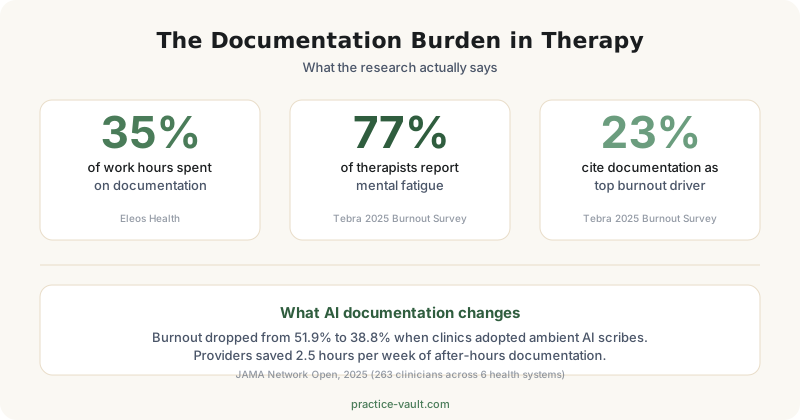
35% of a therapist's working hours go to documentation. Not therapy. Paperwork.
That is 16 minutes of notes per client session, stacked across a full caseload. A 30-client week means 12 to 14 hours of documentation alone, before you count prior authorizations or coordination letters.
The numbers are not estimates. They come from Eleos Health's analysis of thousands of clinicians, and they line up with what practitioners keep telling us in forums and support groups.
The burnout connection
Tebra's 2025 burnout survey found that 77% of therapists report mental fatigue, the highest rate of any medical specialty. Documentation and charting tied as the number one burnout driver at 23%.
This is not a niche problem. A 30-client week with 16 minutes of notes per session means therapists are spending their evenings doing paperwork instead of resting or seeing more clients.
What AI documentation changes
The JAMA Network Open published a study in 2025 showing that ambient AI documentation reduced burnout from 51.9% to 38.8% and saved providers 2.5 hours per week of after-hours charting. Across 263 clinicians and 6 health systems.
The good news: this is a problem with a solution. AI documentation isn't science fiction — it's a studied intervention with measurable results.
This is not a pitch. It is what the data says.
We build Practice Vault, a practice management platform with AI documentation included at no extra cost. If you run a practice and want to see how this math changes for your team, we are here.
Get StartedSources
- Eleos Health: clinicians spend up to 35% of time on documentation
- Tebra 2025 Physician Burnout Survey: 77% mental fatigue, 23% documentation as top driver
- JAMA Network Open 2025: AI scribe impact study, 263 clinicians, 6 health systems